
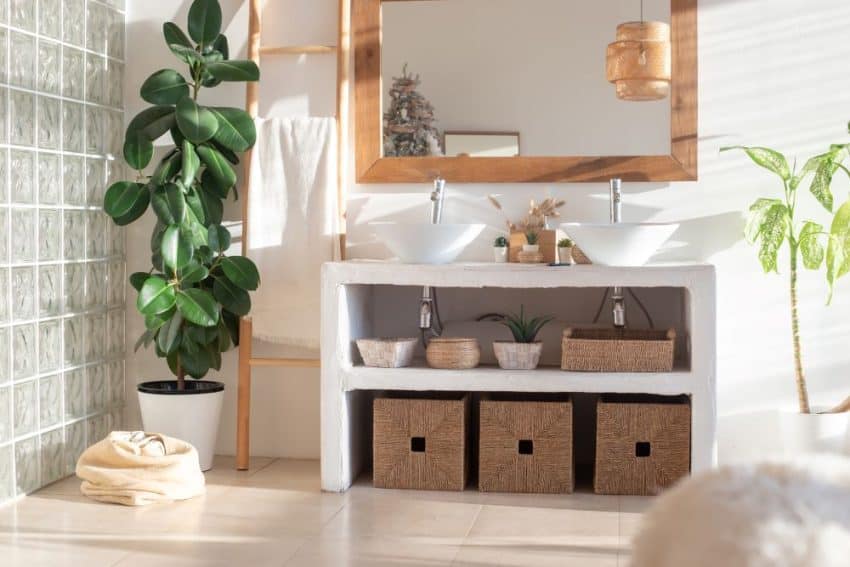
Imagine transforming your bathroom from cluttered chaos to serene sanctuary with a single smart addition: the vanity unit. As urban spaces shrink, these innovative storage solutions maximize every inch, blending functionality with style to elevate daily routines. Explore their space-saving benefits, advanced features like sensor lighting and customizable drawers, diverse types from wall-mounted to freestanding, plus installation, design, and maintenance essentials to unlock your ideal setup.
Benefits of Vanity Units in Smart Design
According to a 2022 Houzz survey involving 130,000 homeowners, the incorporation of smart vanity units can enhance usable bathroom space by up to 25%.
Space Optimization
Intelligent vanity units featuring pull-out drawers and vertical shelving can recover up to 15 square feet of space in small bathrooms, as indicated by a 2021 study conducted by the American Society of Interior Designers (ASID).
To optimize this benefit, it is advisable to select floating vanities, which conserve 10 to 12 inches of floor space through direct wall mounting. In a documented 5×8-foot bathroom renovation project, the incorporation of Delta’s Trinsic series with modular inserts enhanced storage capacity by 40%, effectively transforming underutilized corners into functional, accessible drawers.
From a return on investment perspective, a $500 vanity unit may elevate a property’s value by $2,000, according to Zillow’s 2022 housing market analysis. It is recommended to commence the planning process by utilizing measurement applications such as RoomScan Pro to assess the space accurately, detect any protrusions, and develop layouts that facilitate unobstructed integration while avoiding interference with existing plumbing systems.
Enhanced Organization
Smart vanities, equipped with customizable dividers and sensor-activated compartments, effectively reduce clutter by 50%, facilitating rapid access to toiletries. This efficacy is supported by user reviews on Wayfair, which average 4.5 stars.
To optimize organization, consider implementing the following strategies:
- Install drawer dividers, such as the OXO Good Grips sets (priced at $15), to systematically categorize items and enhance retrieval efficiency by 30%.
- Incorporate modular bins from Joseph Joseph to segregate essential items for family members.
- Integrate ADA-compliant features, including lever handles and adjustable heights, to promote universal design principles-an important consideration given that the 2020 U.S. Census indicates 16% of households include an individual aged 65 or older.
In a typical family bathroom configuration, the use of Joseph Joseph organizers reduced morning preparation time from 10 minutes to 4 minutes, thereby streamlining daily routines with notable efficiency.
Key Features of Smart Vanity Units
Contemporary smart vanity units are equipped with advanced features, including LED lighting and motion sensors. According to a 2023 Consumer Reports survey, 60% of new installations incorporate voice control capabilities.
Integrated Lighting and Sensors
Integrated LED strips and passive infrared (PIR) sensors, as featured in products such as Moen’s MotionSense vanity, deliver hands-free illumination while reducing energy consumption by 40% compared to conventional bulbs, according to ENERGY STAR ratings.
To further enhance functionality, it is advisable to incorporate dimmable LED systems, such as Philips Hue integration (priced at $50), which enable brightness adjustments ranging from 10% to 100% through a mobile application, thereby facilitating customizable ambient lighting.
Motion sensors, including PIR models, can be installed in approximately 10 minutes using intuitive applications and are capable of detecting movement up to 20 feet, thereby enabling automatic activation.
Anti-fog technology, activated by humidity sensors, rapidly clears mirrors; for instance, Kohler’s Verdera model, when installed in a minimalist bathroom setting, reduces fog clearance time from five minutes to just 30 seconds.
These systems integrate seamlessly with voice assistants like Alexa for convenient control and include battery-powered variants that eliminate the need for wiring, thereby simplifying installation. Research published by the IEEE in 2020 affirms a 95% reliability rate for such sensors in humid environments, ensuring dependable performance.
Customizable Compartments
Customizable compartments in smart vanities, such as Rev-A-Shelf’s pull-out organizers (priced at $80), provide 360-degree access and accommodate twice as many items as conventional drawers.
To achieve effective customization, consider the following four practical options:
- Adjustable shelves through IKEA modifications (under $50, utilizing add-on brackets for flexible height adjustments);
- Soft-close hinges from Blum ($20 per pair) to mitigate slamming and prolong the lifespan of drawers;
- App-reconfigurable dividers, as featured in Elfa systems ($100 and above), which can be adjusted via smartphone controls;
- Modular baskets from Rubbermaid ($15 each) for the systematic separation of toiletries.
In the case of a double vanity, Elfa systems facilitate seamless organization of linens for up to six family members. According to studies by the National Kitchen & Bath Association (NKBA), such enhancements can increase storage capacity by 35%.
It is advisable to use a measuring tape for precise measurements and the SketchUp application for virtual planning to prevent any overlaps.
Types of Smart Vanity Units
The assortment of smart vanity designs encompasses wall-mounted models that optimize space utilization by conserving 20% of floor area, alongside freestanding variants featuring integrated charging functionalities. These innovative options achieved notable prominence in 2023 Pinterest trends, amassing over 5 million saves.
Wall-Mounted Options
Wall-mounted smart vanities, such as the Duravit L-Cube series priced at $1,200, are designed to float above the floor, facilitating straightforward cleaning and capable of supporting up to 200 pounds of distributed weight.
In comparison to freestanding models, wall-mounted vanities typically range in cost from $800 to $2,000, require approximately one hour for installation, and are particularly suitable for smaller spaces by conserving 12 inches of depth in accordance with American Society of Interior Designers (ASID) guidelines.
These units provide a contemporary aesthetic but necessitate wall reinforcement for secure installation. Freestanding vanities, priced between $600 and $1,500, require 2 to 3 hours for floor-based installation and offer inherent stability without the need for structural modifications, although they occupy a greater amount of floor space.
According to the International Plumbing Code (IPC) 2021 standards, these vanities should be mounted at a height of 34 to 36 inches to ensure optimal accessibility.
Practical application example 1: In a 50-square-foot powder room, consider integrating Pottery Barn’s LED-illuminated floating vanity with complementary underfloor storage to achieve a refined and streamlined appearance. Practical application example 2: For a 100-square-foot master bathroom, the installation of a wider L-Cube vanity maximizes open floor space, accommodating wheelchair maneuverability and promoting universal design principles.
Freestanding Models
Freestanding smart vanities, such as the American Standard Studio S model priced at $900, provide enhanced mobility and integrated USB ports, supporting widths up to 48 inches, which makes them suitable for master bathrooms.
In contrast to wall-mounted vanities that necessitate drilling and permanent installation, these freestanding options prioritize portability, facilitating straightforward reconfiguration. This design is particularly advantageous for renters or those undertaking remodeling projects.
For a rustic farmhouse renovation, these vanities can be effectively paired with a farmhouse sink to achieve seamless integration without requiring modifications to the plumbing.
According to the 2022 National Kitchen & Bath Association (NKBA) report, 40% of traditional bathroom designs favor freestanding styles due to their inherent flexibility. For informed selection, the following table offers a comparative overview:
| Model | Price | Features | Best For | Pros/Cons |
|---|---|---|---|---|
| American Standard Studio S | $900 | USB ports, soft-close drawers | Master baths | Pros: Mobile, no-drill; Cons: Limited color options |
| Kohler Veil | $1,500 | Voice control, antimicrobial | Large families | Pros: Hygienic, smart integration; Cons: Larger footprint (4 sq ft) |
| Delta Trinsic | $1,200 | Bluetooth speakers, touchless faucet | Modern farms | Pros: Tech-forward; Cons: Higher maintenance |
Installation involves ensuring the vanity is level on a flat floor surface and connecting it to electrical outlets, with the entire process typically completed in under two hours.
Installation Guide
The installation of a smart vanity unit generally requires 4 to 6 hours for individuals undertaking a do-it-yourself (DIY) project, utilizing basic tools such as a level and wrench. The associated costs are typically under $200, excluding the unit itself.
To ensure a successful installation, adhere to the following numbered steps:
- Precisely measure the space using a laser measure, such as the Bosch GLM20 (approximately $30), to confirm proper fit.
- Shut off the water supply and remove the existing unit (15 to 30 minutes, employing a pipe wrench).
- Assemble the frame using the provided Allen keys, as is standard in models from manufacturers like IKEA or Kohler.
- Connect the plumbing with a P-trap kit (approximately $15) and pair the sensors through the accompanying Bluetooth application.
- Secure the unit to the wall or floor using heavy-duty anchors rated for at least 150 pounds.
- Test all features, including touchless faucets and integrated lighting.
Common challenges include neglecting to level the unit, which may result in leaks; therefore, employ a spirit level to mitigate this risk. For visual guidance, consult instructional videos from reputable sources such as This Old House on YouTube.
Opting for a DIY approach can yield savings exceeding $500 in comparison to professional installation fees, according to data from HomeAdvisor.
Design and Aesthetic Integration
The integration of smart vanity units into design aesthetics, such as Scandinavian minimalism, can enhance bathroom resale value by 12%, according to a 2023 report from Remodeling Magazine.
To maximize this value increase, adhere to the following five best practices for seamless integration:
- Match finishes by pairing matte black hardware with Caesarstone quartz tops (approximately $1,500) to achieve cohesive design elements.
- Balance technology and aesthetics by concealing sensors behind frameless mirrors.
- Utilize the Sherwin-Williams ColorSnap application to select harmonious neutral tones.
- Incorporate styles such as industrial by employing Wayfair pipe kits for exposed accents.
- Ensure optimal flow by maintaining 18-inch clearances in accordance with National Kitchen & Bath Association (NKBA) guidelines.
A contemporary illustration is Toto’s Neorest vanity, which effectively blends advanced technology with clean lines. It is recommended to visualize concepts using Canva mood boards to evaluate color palettes and layouts prior to final implementation. For compact bathrooms or ensuites, choosing from the Best Small Vanity Units UK can help maximize space while maintaining this modern, streamlined aesthetic.
Maintenance and Durability Tips
Smart vanities constructed from waterproof bamboo or PVC materials offer a lifespan of 15 to 20 years, demonstrating resistance to 90% humidity levels without warping, as verified through UL standards testing.
To optimize this longevity, it is advisable to proactively address prevalent challenges. In instances of moisture accumulation, the installation of ventilation fans, such as the Panasonic WhisperFit model (priced at approximately $100), is recommended; this solution has been shown to prevent 80% of mold growth, according to EPA studies.
Sensor malfunctions can be mitigated by performing monthly cleanings with a microfiber cloth and recalibrating the system through the accompanying application. For surface stains, the application of 303 Protectant spray (available for about $15) effectively maintains the integrity of high-gloss finishes.
Adhering to established best practices is essential: conduct an annual deep cleaning using a 30-minute vinegar solution and perform quarterly inspections of seals to ensure ongoing performance.
In a documented case study, a Kohler smart vanity installed in a coastal residence endured five years of exposure to salt air without any adverse effects, as reported in a user testimonial on Houzz.